

“So, when you cannot change a man’s opinion, recognize that he is a child, clap with him, and if you do not wish to do this, you have only to hold your peace.” Epictetus Discourses Book I Chapter 29
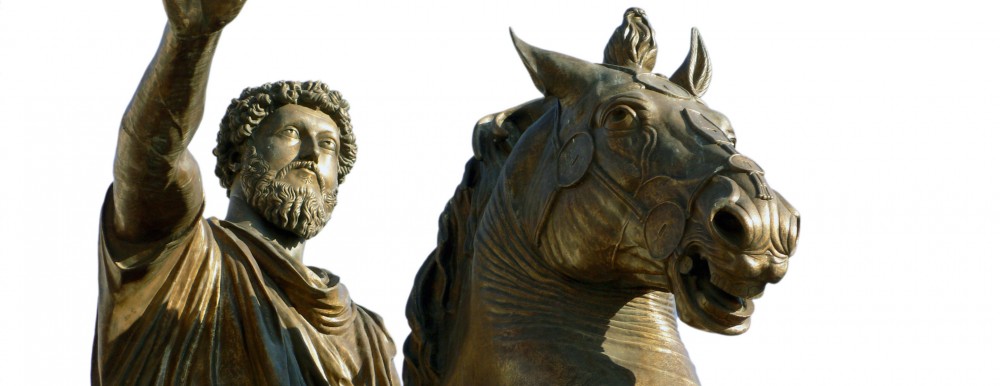
“So, when you cannot change a man’s opinion, recognize that he is a child, clap with him, and if you do not wish to do this, you have only to hold your peace.” Epictetus Discourses Book I Chapter 29

Another way you can take care of the “we,” in your life is to go out of your way to do something nice for those closest to you.
In my first “we” post I listed who I considered to be part of my close circle (those who I consider to be the “we” in my life). Remember:
So, for these people you can do any of these things:

Just a few suggestions for looking after “us.” Of course some of these are more or less appropriate based on the situation.

So, how about REALLY listening to those around you? Once you master that, then maybe you can go out and fix the world beyond. I cannot tell you how many times I have committed to doing this…to really listening. I would compare this effort to speeding, when I was younger. NOTE: Now, I regularly drive about 5-7 MPH over the speed limit. I do not do this for safety or because I think that the speed limits are correct. It is just not worth it to me to get a ticket AND have my time wasted by a stop. Anyway, back in the day I would speed EVERYWHERE, then I would get a ticket and drive around at speed limit-speeds for 6 months. Eventually, my probation would expire and my carefulness would wear off. Then, I would speed again.
This is a lot like how I listen in my life. I am ALWAYS preoccupied with something (with a lot of things, actually). My child, my wife, or a coworker will be talking to me and I suddenly realize that I was not listening. Even worse, the talker will realize it and then ask, “Are you listening to me?” BUSTED! Whether I realize it or I am busted by the speaker, this is like getting that speeding ticket. It is time to slow down and really listen. But how do I do that? My favorite way to do that is called Active Listening.

This is not active listening!
There are many way to actively listen, but here’s my technique:
This is just one way to be virtuous with your “we.” Your interactions with those closest to you define who you are. If I am not listening to them, then I am not a good listener, and that does not honor those closest to me who are trying to communicate with me.
Here is an example of Epictetus’ humor from his Discourses Book 1, Chapter 26:
“I know a man who clung to the knees of Epaphroditus [a philosopher] in tears and said he was in distress, for he had nothing left but a million and a half [dollars]. What did Epaphroditus do? Did he laugh at him, as we should? No, he was astonished, and said, ‘Unhappy man, how ever did you manage to keep silence and endure it?”

Late nights with college friends, long flights with aircrew over the ocean, discussions at family gatherings, social parties, and poker games…it seems that I have discussed “how things should be” with thousands of people. I have heard countless opinions on how the world “should be.” I certainly have a few of my own. We can ironically refer to these conversations as “solving world hunger.” Dialogue below:
So often, I reach for the moon and stars with my mind, thinking I can have an effect. I get frustrated at the entire world around me, and how messed up it seems at times. I want to fix it. If I were king of the world, I certainly could. In the end, all this thought and talk about “solving world hunger” is just talk. It has very little impact.
“If I were the king of the world, I tell you what I’d do. I’d throw away the cars and the bars, and the war, and make sweet love to you”–Three Dog Night from “Joy to the World”

You probably won’t solve world hunger.
So then how do I make an impact, after I am ready to serve? Well, this is where I start contemplating “we.” By “we,” what do I mean? Well, let me start a list of people I think of as “we”:
Certainly, I should not continually and focus on me alone. However, when I am ready to serve, it certainly should begin with those closest to me. The philosopher has to determine who the “we” are (or is). Above I have listed my “we.” Some people think that every human, plant, and animal in the world is their “we.” More power to them. I claim that they have overextended their efforts. I propose that they have minimized their impact by trying to control what they cannot, and by diverting their precious resources away from what they can control. The closer the radius, the greater likelihood that there is control.
I will end this entry, with one simple exercise that you can practice in your interactions with your “we.” For one day (or one week if you dare), maintain your patience with your spouse/significant other and/or your children. When you feel impatience with them setting in, take some breaths and realize that they are not yours, that they are independent of you. Then, really listen to them! Their actions are completely out of your control, but your REACTIONS to them are completely in your control.

Try really listening to your loved ones.
Good luck! You know the exercise won’t be easy. Please let me know how it went.